
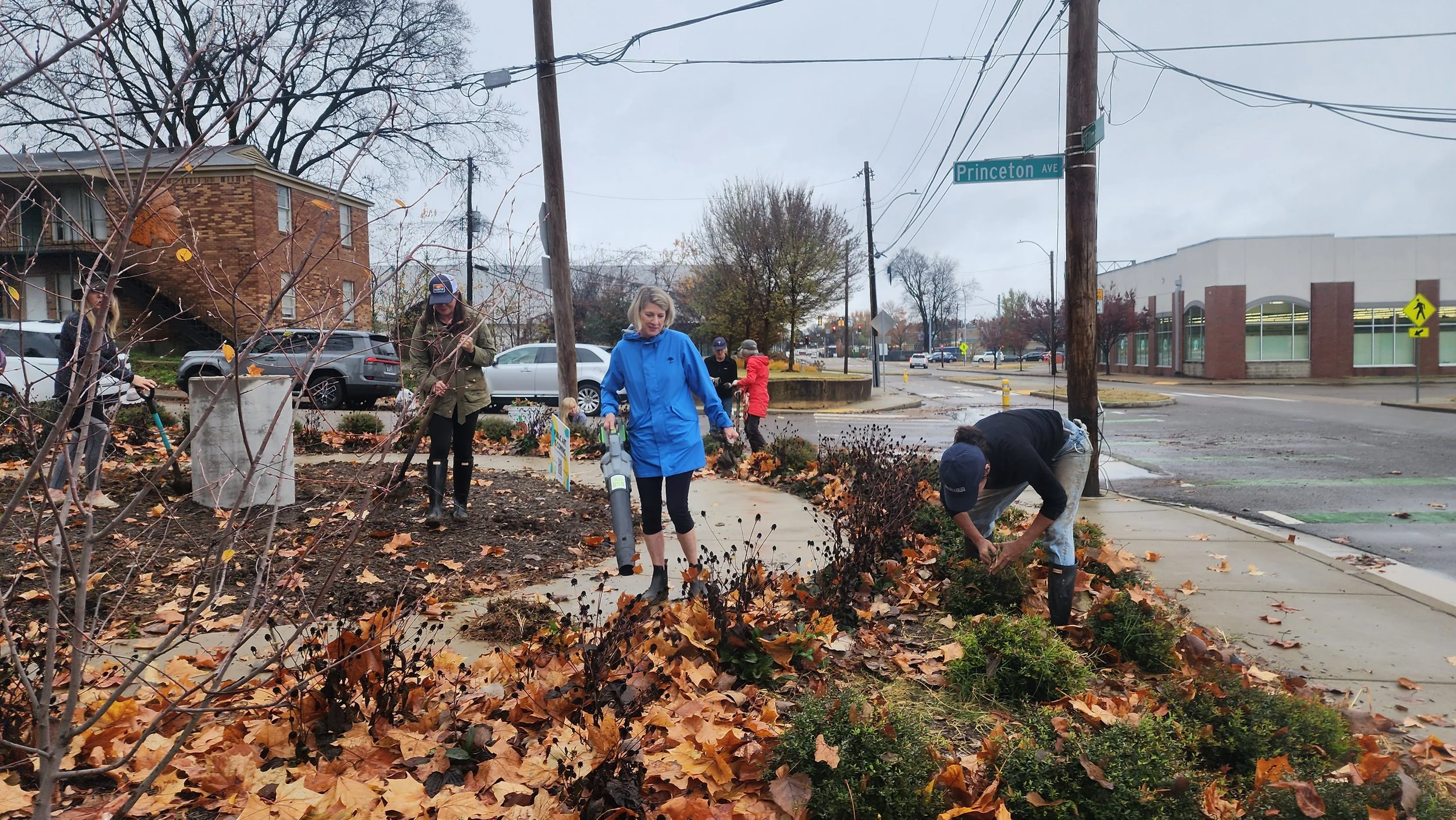
Tidying up the soon-to-be-completed Tilllman Sculpture garden
Conversation with Linda Mallory, President of the Little Garden Club
November 20, 2025
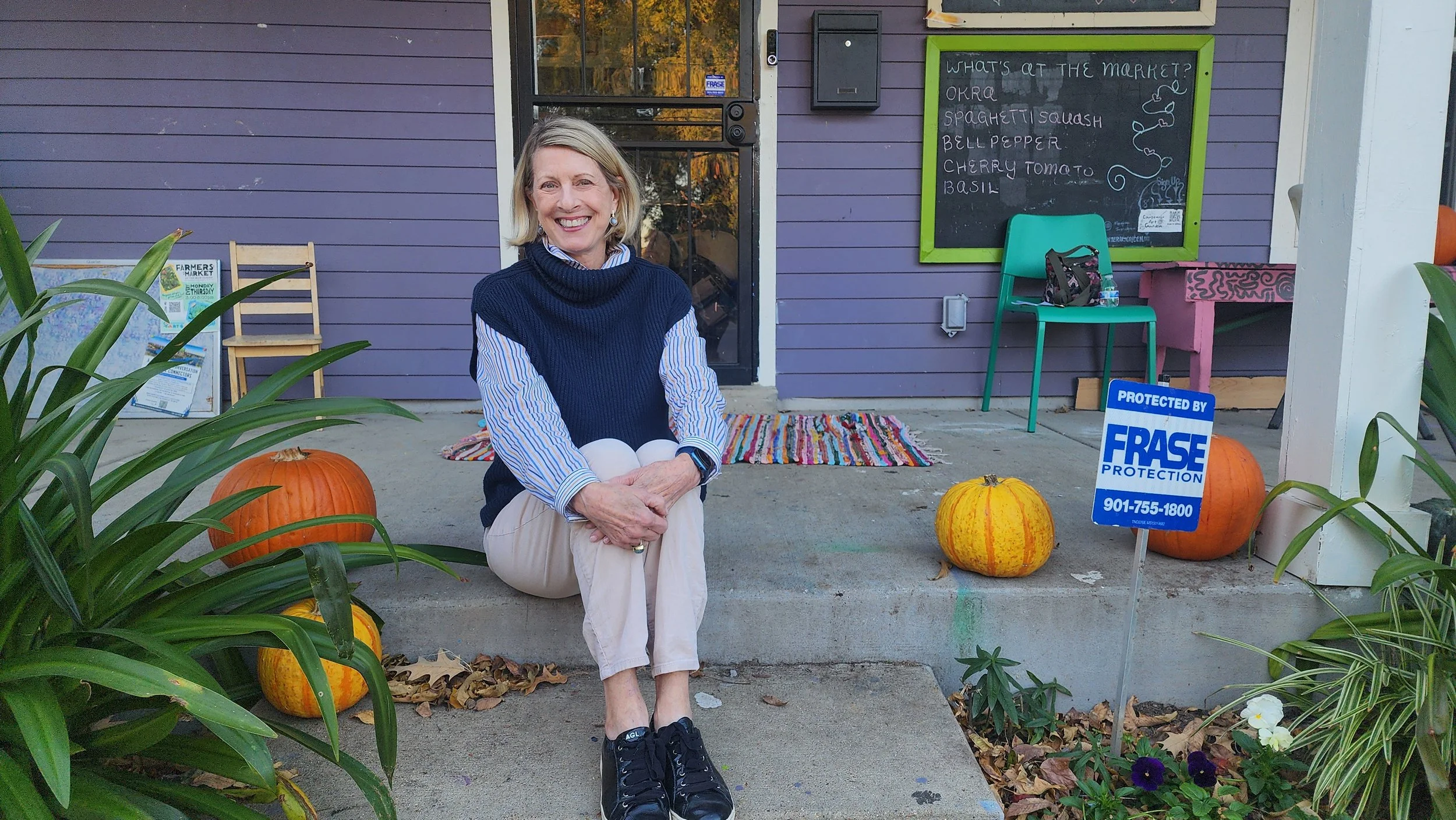
Linda Mallory, president of The Little Garden Club. The Little Garden Club is a long-time supporter of The Carpenter Art Garden.
On November 20, about 10 members of the Little Garden Club came to weed, clear out flower beds, and plant fall flowers for beautification. During that time, Ayanna, Interim Executive Director, sat down with Linda Mallory, President of the Little Garden Club, to learn more about the club and CAG’s relationship with them over the years. The following is a sneak peek into their conversation.
Ayanna: Linda, thank you so much for letting me steal you away from the ladies. I don’t know much about your club, so can you tell me what the purpose and mission of the Little Garden Club is?
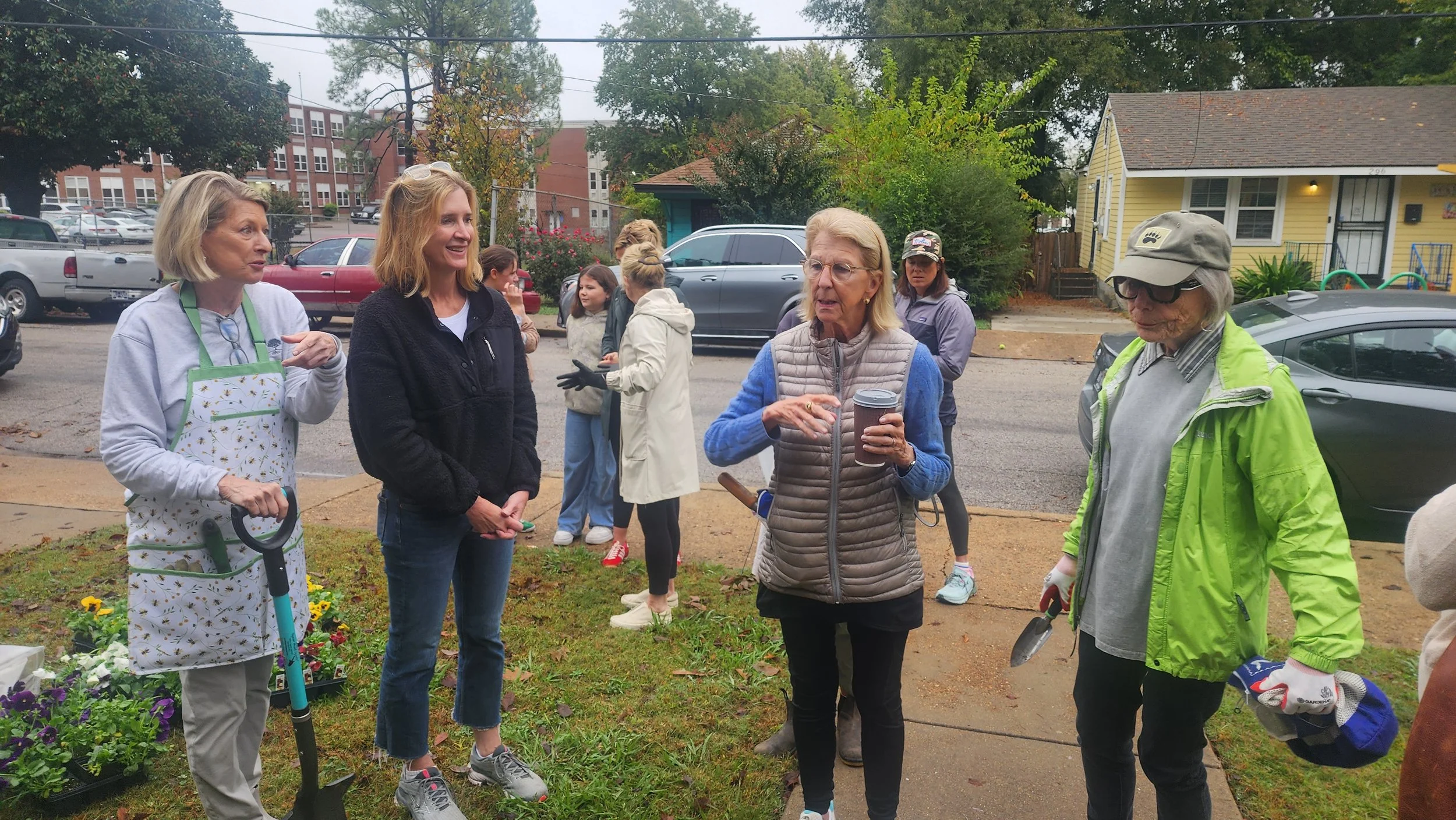
Little Garden Club members gather at The Purple House
Linda: Well, we are a non-profit volunteer organization, and we focus on the development and promotion of horticulture, conservation, flower arranging, and garden design. We have a strong commitment to supporting and cooperating in community improvements that enhance and further the goals of civic beautification, which is why we love partnering with organizations in Memphis like the Carpenter Art Garden.
Ayanna: Yes, and we appreciate how you all have dedicated your time to beautifying our campus today by cleaning out the flower beds and planting flowers to bring color and beauty to our spaces.
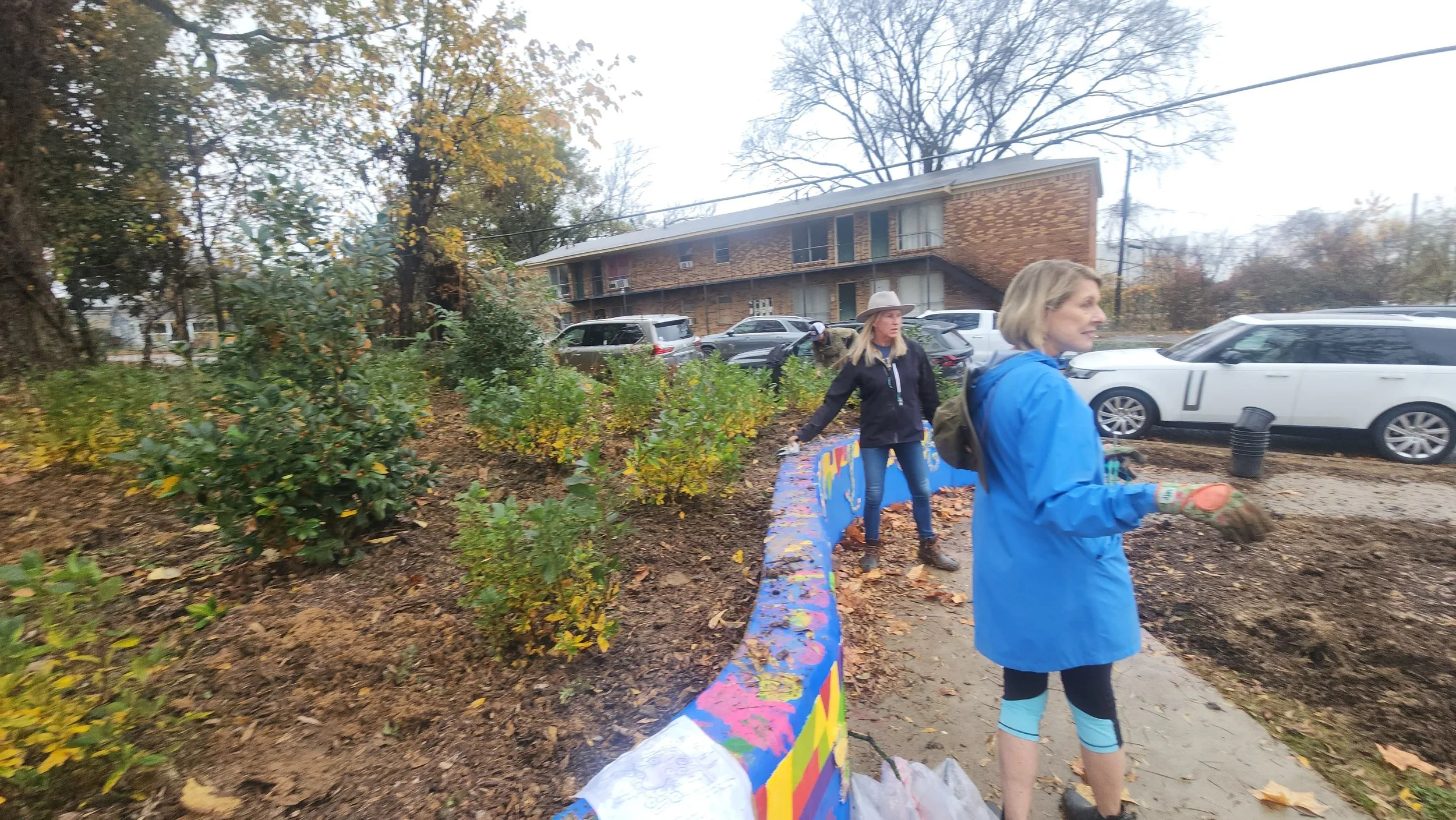
With gardening gloves on, Little Garden Club President Linda Mallory and other members begin work on the Tillman Sculpture Garden. Garden construction is scheduled for completion in 2026.
Linda: We like to volunteer and get our hands dirty, but we also raise money. We put on events and raise money that goes directly into a community fund, so we are looking for opportunities to support things in our community. For example, we are benefactors at the Memphis Botanical Garden and the Wolf River Conservancy, where we help plant trees every year. There are certain organizations that we like to support again and again.
Ayanna: And thank you for coming out and supporting the Carpenter Art Garden again and again. Recently, one of the ways you have supported us is by writing a grant. Can you tell me more about that?
Linda: The grant is funded by the Garden Club of America and is called the Common Ground Initiative. The grant’s focus is for club members to get engaged in parts of their local communities that are underfunded and under-resourced. The grant is for $10,000 with a goal to find common ground with your neighbors. There are 200 Garden Club of America clubs, so clubs from all over the country—like New York and Atlanta—are applying, and they want to give funding to worthy projects. In 2025, they gave out six national grants, and we were one of them!
Ayanna: That is so exciting that you all won this grant!
Linda: Yes, we were so excited! It was a big deal.
Ayanna: And now that funding is going to be used to build the Carpenter Art Garden’s Sankofa Teaching Garden. Can you share more about the vision for this project?
Linda: The Sankofa Teaching Garden is going to be an educational space for the Binghampton community. The idea is to focus on plants that came to this country from Africa during the 15th–19th centuries, and continued to be propagated by African Americans even to this day. These plants are still used in American cuisine and incorporated into medicinal practices. So it’s exciting that this will be a garden that teaches the community about this particular history. There will also be an area of the garden attributed to the growing African community in Binghampton where plants will be represented from various countries in Africa.
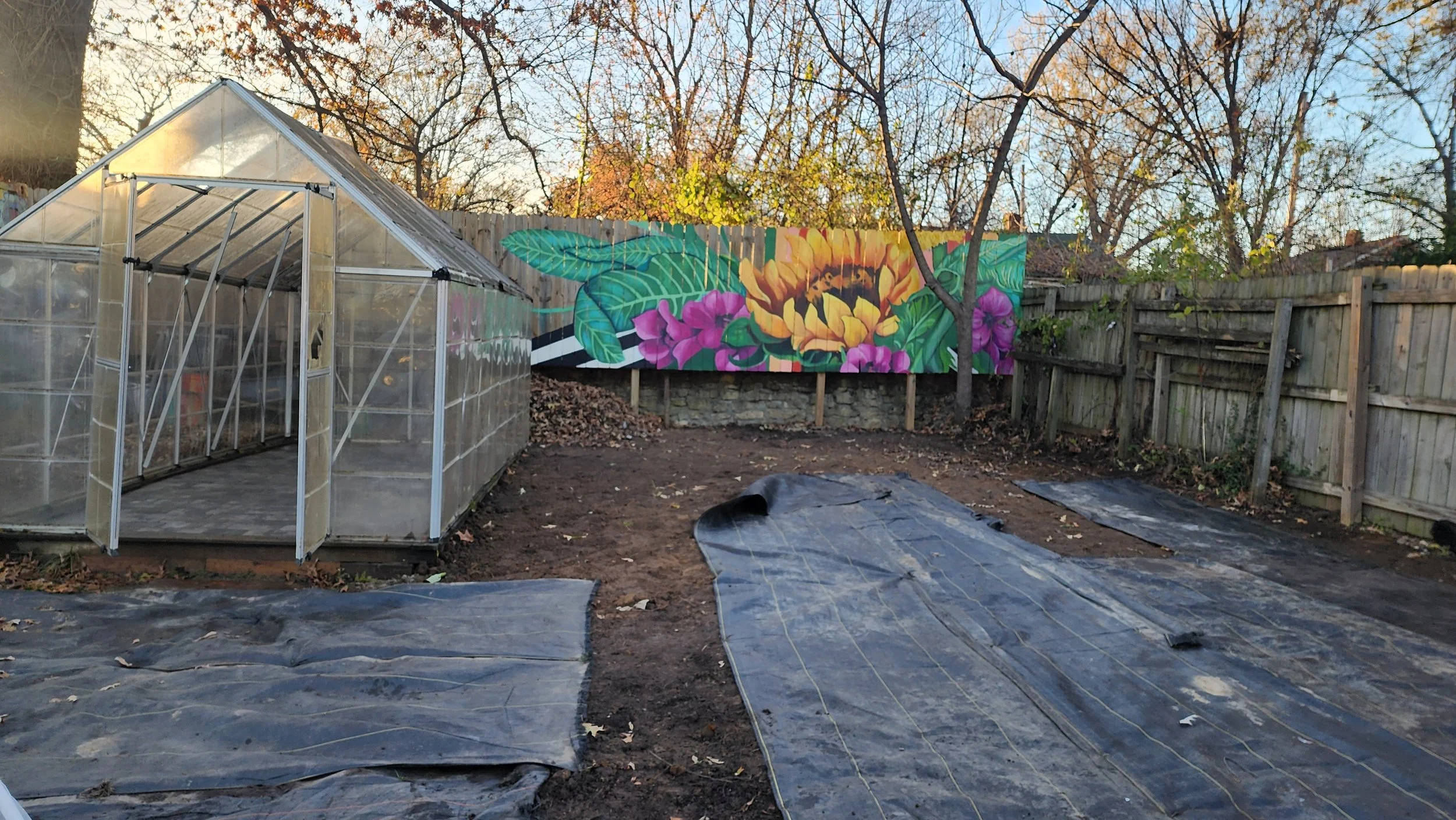
Sankofa Teaching Garden in progress
Ayanna: Many people are not familiar with the term Sankofa, but it’s a word from the Akan people of Ghana, which reminds us that true progress comes from remembering our roots. Many times it’s symbolized by a bird flying forward with its head turned backward. Sankofa teaches us to learn from the past, honor our heritage, and bring wisdom forward into our lives today. And I love that in the Sankofa Teaching Garden, it will be a place where children, teens, adults, and elders will plant, taste, and share—connecting history, memory, and culture. It’s going to be beautiful!
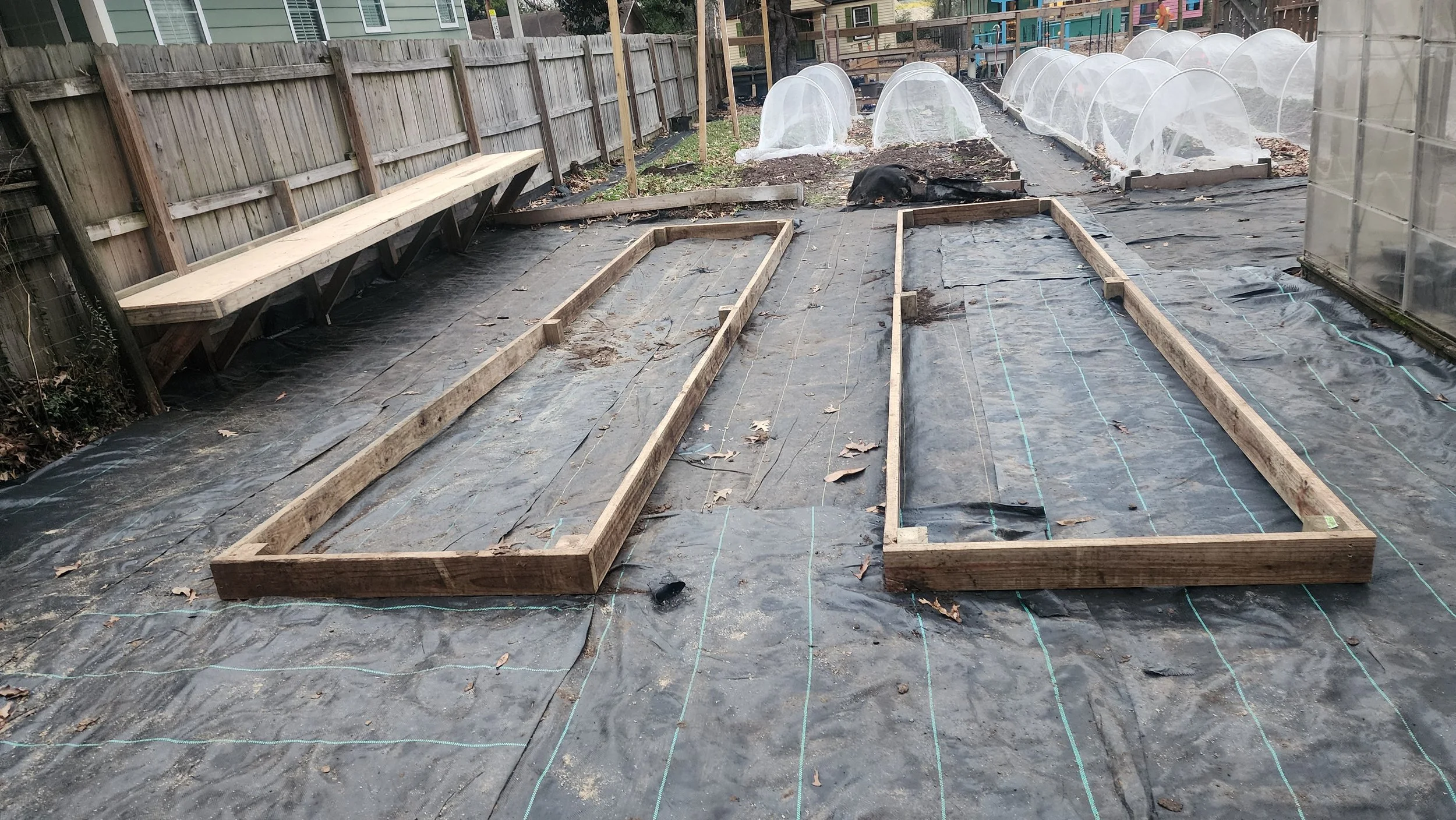
Beds being prepared for the Sankofa Teaching Garden
Linda: We are really excited and can’t wait to see the final project, which we are hoping will be complete this spring.
Ayanna: Yes—we will be working hard to complete this project and can’t wait for the community to enjoy the space! Now, what other projects are you all working on with us?
Linda: We also won a three-year, $6000 grant called “Partners for Plants.” We are in our second year, and we have used this funding to collaborate on the Carpenter Art Garden Tillman Sculpture Park located on the corner of Tillman and Princeton Avenue. We have planted native trees and flowers at least two or three times already and most recently, two Gem Magnolia trees and 25 little Hummingbird Clethra bushes.
Ayanna: The park is going to be so lovely! Well Linda, from the Carpenter Art Garden board members and staff, I just want to thank you so much for your partnership with us. We appreciate the ways that you all look to support us in our mission of transforming Binghampton’s underused spaces into vibrant hubs of art, gardening, and learning. Thank you for sitting down to talk with me. I really look forward to building on this relationship moving forward into the future.
Linda: It was my pleasure. Thank you for having us!
“The Sankofa Teaching Garden is going to be an educational space for the Binghampton community. The idea is to focus on plants that came to this country from Africa during the 15th–19th centuries, and continued to be propagated by African Americans even to this day. ”